
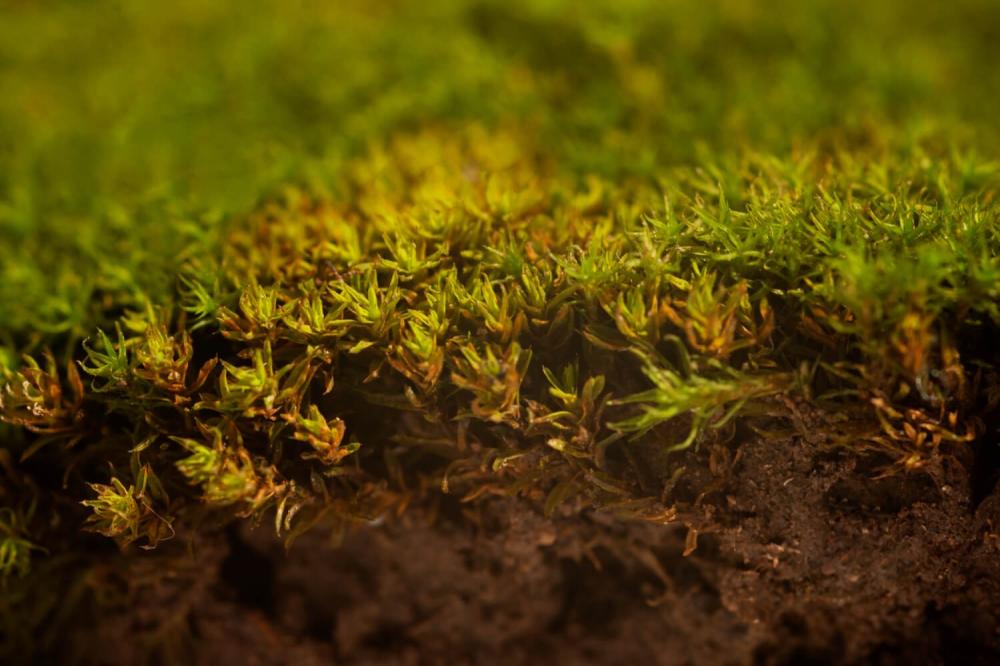
Peat moss is one of the most important agricultural media used in the world of modern agriculture, especially in the cultivation of houseplants and ornamental plants. Peat moss is distinguished by its superior ability to retain water and air, making it an ideal environment for root growth. In this comprehensive guide, we will learn everything about peat moss, how to make peat moss, and how to use it correctly.
What is peat moss soil?
Peat moss is a lightweight organic growing medium. Peat moss is made by extracting it from carbonized mosses, usually of the genus Sphagnum, which decompose and accumulate in swamps and cold, damp areas over thousands of years.
Distinctive properties of peat moss soil
Physical properties
- It is very lightweight; it is about 10 times lighter than regular soil.
- High porosity and ventilation, allowing the roots to breathe.
- It has an exceptional ability to retain water; it absorbs up to 20 times its weight in water.
Chemical properties
- The pH level ranges between 3.5 and 6.5.
- It is poor in nutrients, as it contains very few nutrients.
- Free from pathogens when properly sterilized.
- Free from weed seeds.
Biological properties
- Naturally sterile due to its acidity and the conditions under which it is formed.
- It decomposes slowly and lasts for long periods before needing to be replaced.
- It improves the activity of beneficial microbes in the roots.
Basic peat moss components
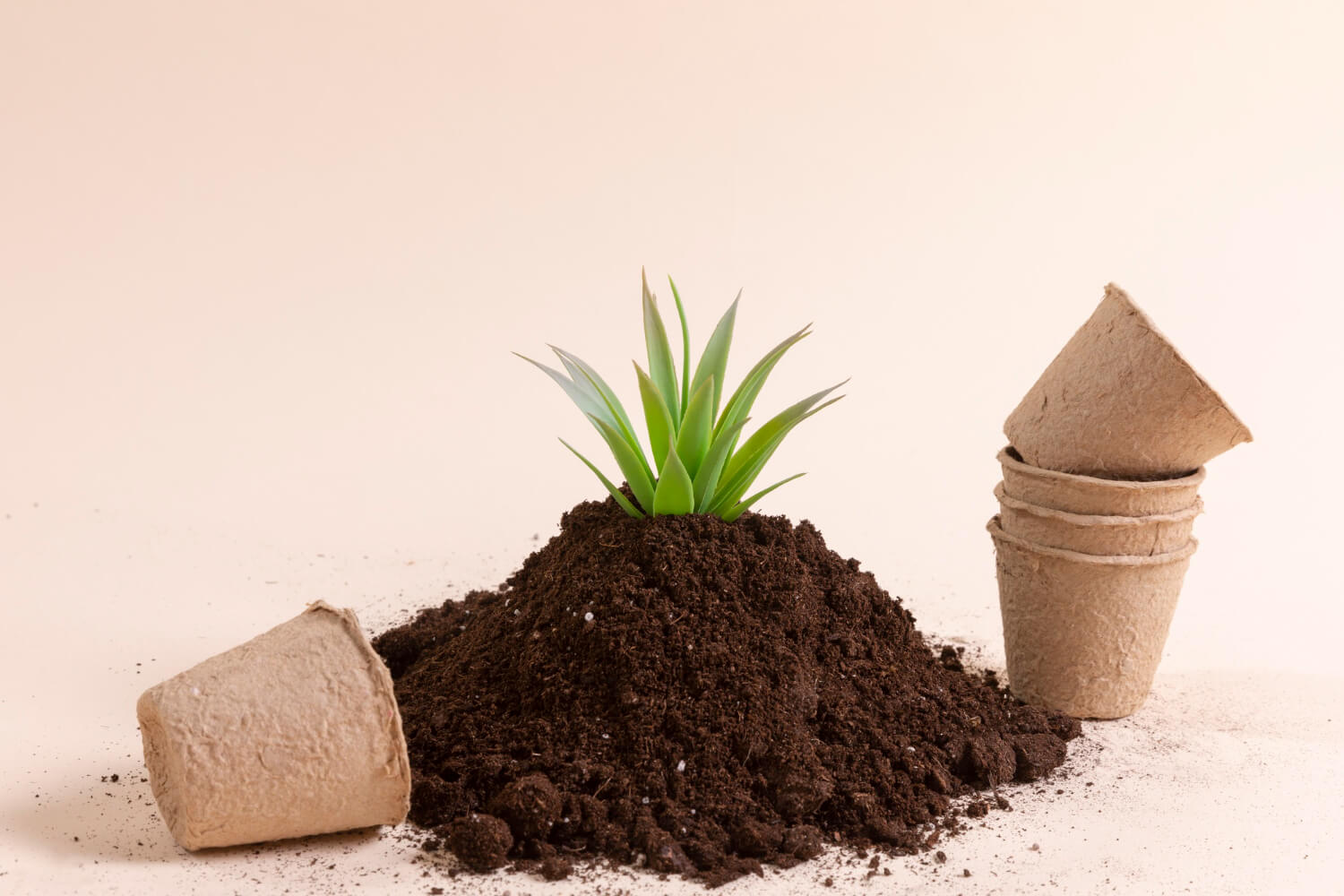
Peat moss in its raw form consists mainly of decomposed moss, but for effective agricultural use it must always be mixed with other ingredients to improve drainage, nutrition, and aeration. Here are some of the ingredients used in the basic method of preparing peat moss:
- The main component is Sphagnum moss, belonging to the Sphagnaceae family, specifically Sphagnum species, and it is found in different stages of decomposition.
- Peat moss is made from leaves, decomposed organic matter from plant remains, humic acid, fulvic compounds, and lignin, which is a slow-decomposing organic material.
- Natural mineral components such as carbon, which is the main organic component, oxygen, hydrogen, nitrogen, and calcium.
- Drainage and aeration improvement components such as perlite, coarse sand, volcanic gravel and tree bark.
- Water retention-enhancing ingredients such as vermiculite, expanded clay, and hydrogel.
- Nutritional and enrichment components such as compost or organic fertilizer, bone meal, blood, and rock phosphate.
- pH adjustment ingredients such as agricultural lime to raise the acidity of peat moss.
How to make agricultural peat moss
- Pure peat moss alone is not a complete soil; it is a growing medium that needs enrichment to become a complete growing environment. The way peat moss works and mixes it turns into a balanced soil that provides proper aeration for the roots, retains water and nutrients, and provides structural support for the plant and a nutrient-rich environment.
- The materials and tools required in the agricultural peat moss method are raw peat moss 6 parts (60%) as the main base for water retention, perlite 3 parts (30%) to improve drainage and aeration, and compost/organic fertilizer 1 part (10%) for nutrition and beneficial microbes.
- Additional materials include vermiculite in the peat moss preparation method to increase water retention (10-20%), coarse sand to improve drainage (10-20%), ground charcoal to purify the soil (5%), slow-release granular fertilizer for long-term nutrition, and pine bark for well-drained plants.
- You can also contact Al Talib store to obtain the ingredients and learn how to make peat moss at home through the social networking site WhatsApp.
You may be interested in: The best fertilizer to increase production
How to use peat moss in agriculture
Peat moss is not just ordinary soil; it is a multifaceted tool that can be used at every stage of cultivation, and understanding its correct uses greatly improves results. Here's how to use peat moss in agriculture:
- Peat moss is used for seed germination because it is soft, sterile, and has a high capacity for retaining moisture.
- Use peat moss for seedlings, cuttings, rooting cuttings, and vegetable seedlings.
- Use peat moss for houseplants, whether they are green leaf plants, flowering plants, or air plants.
- Use peat moss in growing vegetables, leafy greens, and small fruits.
- Using peat moss in hydroponics and soilless farming.
- Peat moss is used in home gardens, for preparing planting beds, and for improving the soil for fruit trees.
You may be interested in: How much agricultural gypsum is needed per acre?
Common mistakes when using peat moss
Peat moss is an excellent agricultural material, but it requires a special understanding of its unique properties. Here are some common mistakes:
- Use pure peat moss without mixing or additives.
- Overwatering and treating peat moss like regular soil in irrigation.
- Neglecting fertilization and mistakenly believing that peat moss is a nutritious soil.
- Failure to adjust the pH and ignoring the natural acidity of the peat moss (pH 3.5-6).
- Dry the peat moss completely and leave it to dry completely, then try to moisten it.
- Reusing peat moss without preparation and using old peat moss directly for a new plant.
- Using untreated/unsterilized peat moss directly from the environment.
- Do not adjust the mixture according to the type of plant and use the same mixture for all plants.
- Applying an incorrect drainage layer, such as placing gravel or stones at the bottom of the pot to improve drainage.
- Ignore the signs for replacing peat moss and continue using compressed and depleted peat moss.
- Store peat moss in a humid or airy place.
You may be interested in: Types of agricultural soil conditioners
Peat moss prices in Saudi Arabia
Peat moss prices in Saudi Arabia are affected by dozens of interconnected factors, including factors related to the method of working with peat moss, factors related to the source and import, in addition to import and logistics costs, factors related to product quality, degree of treatment and purification, composition and acidity (pH), organic content and purity, and factors related to seasonality and occasions.
Buy now: Enriched peat moss, 300-liter bag
Why choose Al Talib Store to buy peat moss?
Al Talib Store stands out as a trusted partner for agriculture enthusiasts and professionals alike. It is not just a store, but an integrated agricultural destination that combines high quality, technical excellence, long experience, and a commitment to customer satisfaction and quality. It has international quality certificates, which guarantees absolute quality, experience, and agricultural expertise in Saudi conditions. It also has a specialized consulting team consisting of specialized agricultural engineers, experts in agricultural circles, highly trained technicians, and multilingual customer service.
Conclusion
Peat moss is an excellent choice for modern agriculture, whether for houseplants or nurseries, thanks to its unique properties in water retention and aeration. It provides an ideal environment for root growth. You can learn how to make peat moss yourself or buy it ready-made according to your plant needs and budget. Always remember that the correct use of peat moss, taking into account the needs of each plant, is the key to success in agriculture. You can also contact Al-Talib Store to obtain all types of peat moss via WhatsApp.
Frequently asked questions about how peat moss works
What is the difference between peat moss and compost?
Peat moss is an organic material that is not fully decomposed and is mainly used as a growing medium to improve soil properties, while compost is a fully decomposed organic material used as a nutrient-rich fertilizer.
Can peat moss soil be reused?
Yes, but only after it has been thoroughly sterilized with steam or sunlight, and new nutrients have been added, as peat moss loses its properties over time.
Is peat moss suitable for all plants?
Most plants tolerate peat moss, but some alkaline plants, such as some vegetables, may need to have their pH adjusted by adding alkaline substances.
How often should I water plants grown in peat moss?
Because peat moss retains water, it needs to be watered more frequently than regular soil. Feel the soil before watering and make sure the surface layer is dry.
Should plants grown in peat moss be fertilized?
Yes, peat moss is poor in nutrients, so plants grown in it need regular fertilization with liquid or slow-dissolving fertilizers.
How do I store unused peat moss?
In a tightly sealed bag in a dry, dark place, away from moisture and insects.